Overview
Reaver is one of Albion’s most unique hybrids: part tank, part utility disruptor, part attrition fighter. In organized 8v8, their role is niche. While they are not your primary damage dealer in the same vein as a Mercenary, they have one of the best damage-uptime styles in the game that periodically allows them to achieve extreme bursts of high damage, followed by general periods of lesser offensive output. Players will enjoy playing Reavers if they want to be extremely good in the solo game, and enjoy playing offtank hybrids in group settings.
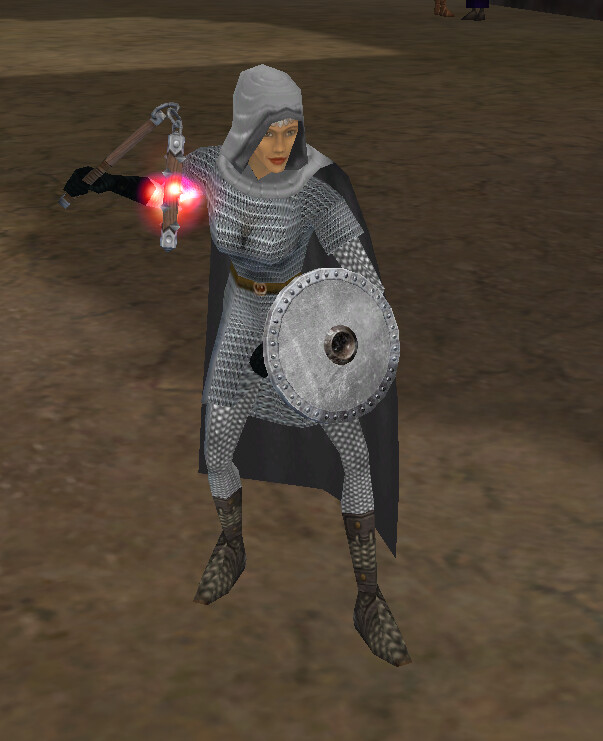
Group Playstyle
Reavers usually satisfy the off-tank role, playing alongside a dedicated Stoicism tank such as a Mercenary or Armsman. A Reaver’s job is to make the enemy group uncomfortable. They use their Level 50 Flexible style, Leviathan, to unleash extreme bursts of high damage.
Leviathan
Reavers are so dangerous in Albion groups because they make fights messy… and Albion usually wins messy fights. When fights break down and enemies are struggling to control all of Albion’s pets and long range utility, Reavers can catch stunned or out-of-position targets and unload a few devastating swings of Leviathan to kill their target. Damage uptime is king. The more damage a Reaver is exerting, the faster he will force enemy support to resort to being reactive instead of proactive.
Guarding without Losing Damage
One of the biggest strengths of a Reaver in Albion is that they are an elite guard/peel tank without sacrificing offense.
Their primary weapon line is flexible, which is a one-handed weapon line. That means:
-
shield is always equipped
-
guard is always active
-
slam is always available
-
engage is always available
… All without any weapon swapping. Compared to an Armsman who has to put away his Polearm, or to a Paladin that has to put away his Two Hander, a Reaver can protect without losing its main source of damage. That gives them incredible responsiveness and ongoing damage threat.
Unique Spell Kit
Reaver has a lot of spells at its disposal to rupt enemies.
The instant spells are incredibly useful at range.
Most notably, the pulsing pbaoe spells interrupt but do not break mezz (except for its damage pbaoe, because damage of course always breaks mezz). This makes Reavers quite good as frontline ruptors since they can bounce around enemy backlines and rupt several targets at once.
Group Spec Options
Reaver character builder:
https://blackthorn-daoc.com/class/Reaver
50 Flexible, 42 Shield, Chants, 41 Soulrending, 6 Parry
-
Most common spec
-
50 Flexible is mandatory since it gives you Leviathan
-
42 Shield spec is mandatory for group spec since it gives you Slam
-
You can alternatively choose to drop soulrending and increase Parry if you prefer a more defensive, solo-oriented build
Group Realm Ability Builds:
-
First priority: Determination, Purge, Long Wind
Unlike damage dealers, whose effectiveness may simply be reduced by crowd control, a Reaver’s value often drops to nearly zero when he is mezzed, rooted, or stunned. If the Reaver is unable to act, he cannot protect the group. Since Reavers do not get Stoicism, they are more prone to sitting out longer roots. Thus, Determination and Purge are essential.**
** -
Second priority: Aug Dex, Mastery of Arms, Mastery of Blocking
Reavers can choose how to build out their passives here, but in general the goal should be to make yourself harder to hit (Dex/Blocking) and to make yourself swing faster (Qui/MoA) to inflict maximum Leviathan damage. -
Third priority: Passives Unquenchable Thirst of Souls
UToS is great for solo builds. Is situationally useful in groups but less so. It is a PBAOE instant lifedrain.
Solo Playstyle
Reavers are one of the strongest 1v1 classes in Albion at 1.65-style balance because they combine three things most melee hybrids don’t have at once: reliable control, ranged pressure, and self-sustained damage that scales into extended duels.
The first major pillar is their shield + slam access without sacrificing weapon flow. Because Reavers can spec high shield and still fight effectively with a flex weapon, they get access to a consistent 9.0 second Slam (stun). That alone is already a duel-defining tool in 1v1: once the target is stunned, the Reaver can fully convert tempo into damage without interruption. In practice, this is where Leviathan becomes lethal as you are often landing Leviathan not just as damage, but as execution pressure during the stun window, meaning opponents can simply die while locked down if they’re already chunked or have no purge/cleanse available. It’s not just “a big style,” it’s a finisher that pairs perfectly with guaranteed control.
The second strength is their interrupt and gap-closing toolkit through instant spells. Reavers have multiple insta abilities that function as long-range rupt tools, which is a huge deal in 1v1. Against casters especially, this lets them deny cast cycles while advancing rather than being forced to eat full damage on the way in. Instead of relying purely on sprinting through damage or hoping for a clean engage, the Reaver can actively break rhythm from range, forcing the opponent to either disengage, waste defensive tools early, or get locked into melee range where the Reaver wants them. This makes the class unusually consistent against caster-heavy matchups compared to other Albion melee.
The third pillar is sustain, and this is where Reavers feel unfair in extended duels. Unquenchable Thirst of Souls combined with their side lifedrain styles (”Indigosnake” style) gives them active healing while dealing damage, not passive recovery. This matters because 1v1 fights in DAoC often become attrition wars once initial burst cooldowns are gone. And that last point is what pushes them over the top. Even if the opponent survives the initial slam/Leviathan sequence, they often come out of it already behind in health, while the Reaver is still self-sustaining through lifedrain pressure.
PvE/Leveling
Reaver is one of Albion’s most flexible hybrid melee classes in PvE. It functions primarily as a durable off-tank DPS engine, contributing sustained damage while the main tank controls aggro.
Core Role: Off-Tank Damage Pressure
In most PvE setups:
-
Armsman or Paladin holds primary aggro
-
You operate just under that threshold as sustained DPS
Your goal is not to control the fight but to accelerate every kill without breaking aggro stability.
Signature Tool: Indigosnake Style (Flexible Spec)
At lower levels (level 18 Flexible spec), one of your key tools is:
Indigosnake style
-
Strong side attack
-
Triggers a hard-hitting lifedrain proc
Why it matters:
-
Adds burst damage inside sustained DPS rotation
-
Improves survivability through lifedrain
-
Increases group efficiency
This style becomes a core part of your early PvE identity and remains a reliable damage spike tool even later.
Defensive Strength: Shield + Cross Guard Utility
One of the Reaver’s most underrated PvE strengths is that you always have a shield equipped. This enables a powerful support function:
Cross Guarding
Even while playing full DPS, you can:
-
Guard the main tank (or secondary tank)
-
Reduce incoming damage on key group members
-
Improve healer efficiency
Because you do not need to swap weapons to maintain your DPS role, you can contribute mitigation passively while still attacking at full efficiency. This makes you uniquely valuable in melee-heavy Albion groups.