Overview
The Minstrel is Albion’s biggest pest and a mandatory component of all groups. Its role is best understood as frontline disruption, tempo control, and emergency utility. While technically a rogue, in groups the Minstrel is less a rogue and more a battlefield saboteur. It creates disorder and synergizes with the Albion core strategy to overwhelm the opponent with pets, interrupts, and long range utility. Be warned, while Minstrel is the most powerful class in the game, it is also the hardest to play. Minstrel is a good class for players that want a challenge and like to be viable in both group play and solo RvR.**
**
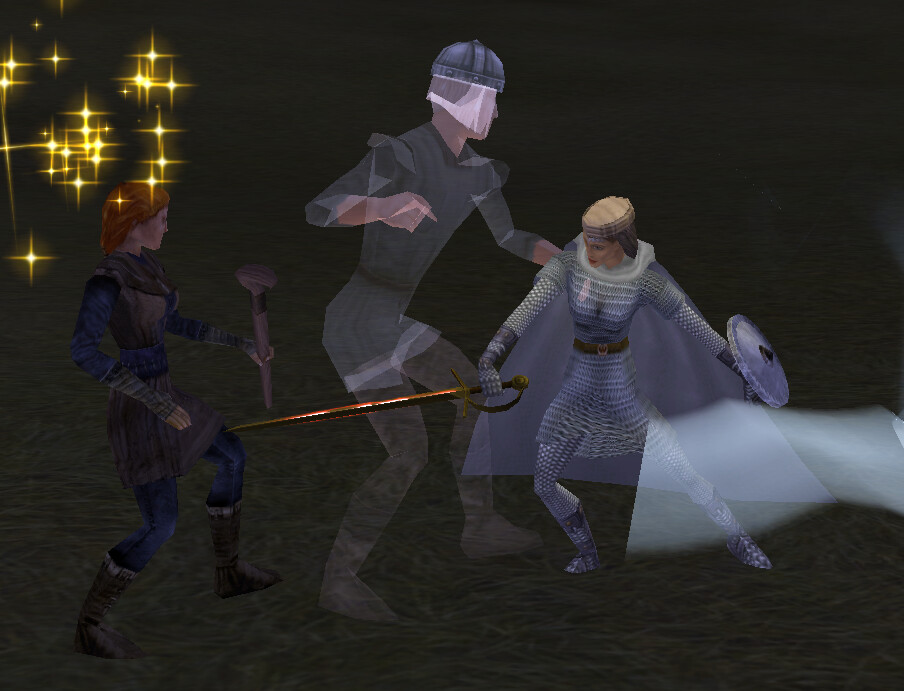
Group Playstyle
In Albion 8v8, the Minstrel is not just “the speed bot.” It is one of the highest APM, highest-awareness roles in the game. If the Sorcerer is the brain of the group, the Minstrel is the chaos engine. Minstrel dictates the fight before it starts. The Minstrel uses an arsenal of unique mechanics to inflict chaos upon the enemy, including two instant DD’s, a pet, a flute that can mezz enemies while the Minstrel is moving, an instant stun, a confusion shout, and a weapon.
Flute Mezz
Flute mezzing is one of the signature advanced Minstrel techniques in classic DAoC, and it’s a huge reason the class is such an elite ruptor. A Minstrel can swap to an instrument (flute) and cast crowd control while moving. Minstrel songs are “pulsed” abilities tied to instruments.
A typical opening of an 8v8 engagement looks like this:
-
Minstrel targets high priority enemy
-
Minstrel starts pulsing his flute mezz from within 1500 range of that enemy
-
While the flute mezz initiates, the Minstrel then turns back and moves away from the enemy outside of 1500 range, but flute mezz continues casting
-
Minstrel waits for his flute mezz pulse to finish, effectively “holding” his pulse
-
Minstrel re-enters 1500 range of that target
-
Flute mezz instantly fires once back within range
-
High priority target is mezzed to start the fight
The above is a classic engagement strategy used by Minstrels to gain an opening advantage.
Pet Demezzing and Derooting
A Minstrel pet is unique in many ways. First, it’s level. Having high Instrument spec permits the pet to be high level, so often times Minstrels come to a fight with a red/purple pet which can interrupt enemy MOC.
Additionally, the pet has a unique CC-clearing mechanic. If the pet gets CC’d, the Minstrel can release the pet to clear its CC then immediately recharm the pet. This is a huge advantage. Imagine a scenario where the Minstrel gets CC’d. In this instance, the Minstrel can release his pet, the pet will then run to attack the Minstrel, in the process breaking the Minstrel out of mezz.
The Minstrel pet is not just for rupting, it’s also a utility tool. The pet can also be used to demezz and deroot team mates. In Dark Age of Camelot, root breaks when the rooted player takes damage. The Minstrel pet can therefore be used to break.
How it works:
-
Recognize the root immediately
-
Select ally
-
Command pet to “go to” ally
-
Wait until the pet is next to ally
-
“Release” the pet
-
The pet will attack your ally, freeing them from root and run back towards the Minstrel
-
Recharm the pet
That last part is important.
Interrupting and Dancing
The Minstrel’s interrupt game is what makes the class oppressive in 8v8. A good Minstrel doesn’t think in terms of one interrupt. They think in terms of an interrupt chain; stacking multiple independent sources of disruption so the enemy healer or caster never gets a clean cast. The instant spell toolkit is your fastest and most reactive tools. After your instant is down, you don’t stop, as you can layer in flute mezz to keep pressure on from range, or switch to your weapon to style and attack. And while you’re doing all of this, your pet can still be independently interrupting.
It goes without saying that all these tools operate on different rhythms and create threat saturation for your opponents. The real power is cognitive overload as your enemy support has to track:
-
your position
-
your pet position
-
your instas
-
your melee pressure
-
possible stun
-
possible mezz
That overload causes mistakes. Late heals, late cures, poor positioning, getting caught in unexpected crowd control.
The Bottom Line
A great Minstrel is always thinking to himself: *“I’m rotating tools so nobody casts.” *Minstrel isn’t about burst. It’s about creating an environment where enemy support cannot function.
Group Spec Options:
Minstrel character builder:
https://blackthorn-daoc.com/class/Minstrel
50 Instruments, 44 Thrust, 8 Stealth
-
50 Instruments is mandatory for groups
-
Gives you access to the level 44 Thrust style “Wyvernfang” which is an extremely useful 27 second follow-up snare. Some defensive-minded peel tanks prefer this spec because you can execute the 27 second snare very quickly with capped swing speed 1h thrust weapon.
50 Instruments, 33 Stealth, 29 Slash
-
50 Instruments is mandatory for groups
-
You lose the 44 Thrust style and merely use Slash weapon for rupts. Damage is already unimpressive on Minstrel so the thought process here is that it doesn’t matter if you drop Slash quite low
-
You still have access to Side Slicer (21 slash) side snare and you use Amthyst Slash (29 slash) as your anytime style.
-
Alternatively, you run this spec but increase Slash to 39 and drop Stealth to 21 if you prefer more damage/weaponskill.
-
These specs is better for Minstrels that like to solo and small man and use Stealth skill to hide
Group Realm Ability Builds:
-
First priority: Long Wind,*** Purge, Speed of Sound ***
Speed of Sound (SoS) is one of the strongest Realm Abilities in classic Dark Age of Camelot because it does something very few abilities can do: It rewrites positioning. It allows your group to either offensively create a charge where classes can collapse on a high priority target, or alternatively, defensively reposition if an engagement is poor. These opportunistic moments are huge for Albion, which thrives off of continued pet pressure, long-range control, and overwhelming opponents. -
Second priority: Passives (e.g., Avoidance of Magic) and other Actives (First Aid / Ignore Pain)
Solo Playstyle
In classic Dark Age of Camelot, especially around 1.65-era rules, Minstrels are one of the strongest solo classes in the game. Not because they have the highest damage. Not because they have the best defense. Because they control the fight better than almost anyone. That’s what makes them dominant.
For all of the reasons above, Minstrel imposes the same dominance in the solo game. They can dictate their fights with speed and stealth, and its hard for an enemy to go toe-to-toe with a class with all of that utility, let alone having to do it vs both the Minstrel AND his red/purple pet!
The ability to use an instant stun followed by flute mezzing creates a lot of control which permits the Minstrel to take on large groups of enemies.
The ability to self clear CC by releasing your pet makes it nearly impossible to control a minstrel unless the Minstrel is stunned.
Realm ability SOS allows the fight to be reset in the event of an unfavorable matchup.
PvE/Leveling
Minstrel is one of Albion’s most versatile PvE utility classes. In leveling groups, the Minstrel is not just a damage dealer, it is a tempo controller, crowd control tool, and supplemental DPS/support hybrid.
Core Role: Utility DPS + Group Control
In most leveling groups, the Minstrel operates as a hybrid between support and damage:
-
contributes steady melee or hybrid DPS
-
controls fights with crowd control
-
smooths out pulls when things go wrong
-
helps reduce downtime between fights
Pet Usage: Extra Damage and Utility
Your pet is a major part of your PvE contribution. Depending on pet type and situation:
Damage Role
-
Pet adds sustained DPS
-
Helps finish targets faster
-
Increases overall group kill speed
Utility Role
Some pets provide:
-
ranged spellcasting pressure
-
supplemental damage types
-
situational control effects
Your pet should always be active unless CC or positioning demands otherwise. Think of it as a second DPS source running alongside you.
Downtime Support: Songs and Recovery
Between pulls, Minstrels provide critical group sustain via songs.
Power Song
-
Helps casters recover faster
-
Reduces downtime between pulls
-
Keeps group chain-pulling efficiently
Heal Song
-
Provides passive regeneration
-
Reduces pressure on Cleric
-
Smooths out minor damage between fights
During downtime windows:
-
ensure songs are active
-
keep group topped off indirectly
-
prepare CC and positioning for next pull
This is where Minstrel efficiency really shows.