Overview
The Friar is a quarterstaff-wielding, hybrid secondary support class of Albion. While Clerics remain the primary support class, a Friar significantly increases the group’s overall healing and utility output by handling many secondary support responsibilities, in addition to providing essential resists that the Cleric doesn’t have access to. The Friar’s role is often best understood as a support extension of the Cleric rather than as a primary support. Friar is a good choice for somebody that prefers playing support or who wants to play a class that is both desired in groups for its support role, but also can dominate 1v1 with by switching its spec to more melee-oriented.
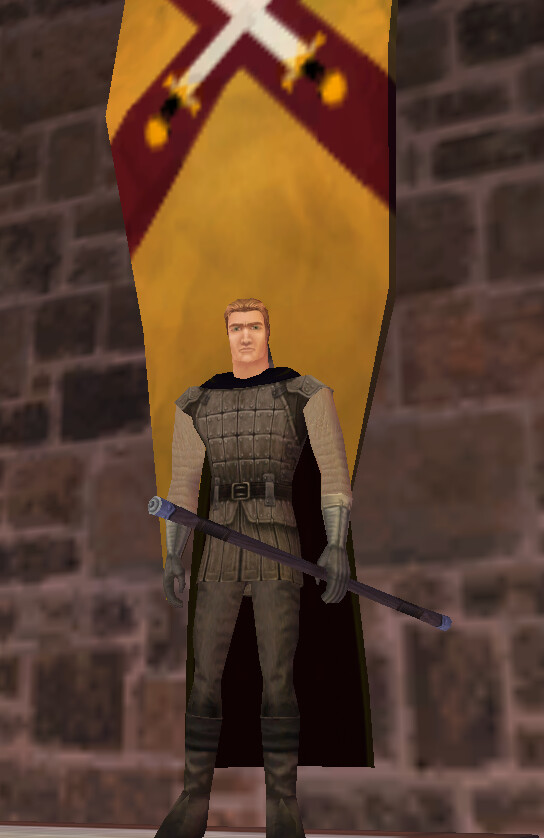
Group Playstyle
In a typical Albion group, the Friar spends much of the fight playing a passive support role from the backfield. At a high level, a Friar spends most of the fight playing conservatively in the backfield, acting as a hybrid healer and utility support, permitting its Cleric counterpart to play more aggressively since they have access to ranged stuns and nukes. Friars are constantly asking themselves “*does somebody need healing?” “is there a tank in my backfield that I can snare?” “is the cleric free to cast or do I need to be pre-healing incoming damage?” *
Elemental Group Resist Buffs
One of the Friar’s most underrated contributions to an Albion 8v8 group is their access to group Heat, Cold, and Matter resist buffs. While these buffs don’t generate obvious combat messages or flashy plays, they directly reduce incoming magical damage throughout the entire fight and provide protection against the most common enemy caster setups.
In classic 1.65 RvR, Hibernian caster groups commonly use heat nukes and Midgardian caster groups commonly use cold nukes. Because of this, Friar resists provide direct mitigation against the most common forms of magical burst damage that Albion will encounter. This is one of the most compelling reasons to include them in RvR groups.
Emergency Peels
One of the subtle strengths of the Friar in group RvR is access to the Level 18 Staff spec side-position snare, which allows them to function as an effective emergency backup peeler when the situation demands it. This snare is 27 seconds long which makes it incredibly good. In an ideal fight, the primary responsibility for protecting the backline falls to classes such as an Armsman or another designated peel tank. However, fights rarely unfold perfectly and the Friar is typically positioned near Albion’s caster and support classes already. This makes the Friar an indispensable emergency peeler when it is not healing or curing. **
**
The Offensive Friar
A good Friar understands that their first responsibility is keeping the group stable through healing, curing, and defensive support. However, when pressure on Albion’s backline is under control and healing demands are low, the Friar can look for opportunities to move forward and become an active disruptor. When pushing forward, the Friar’s goal is usually not to deal significant damage or join the primary assist train. Instead, they are looking to interrupt enemy support. Even if the Friar never secures a kill themselves, forcing enemy support into a defensive posture can dramatically shift momentum.**
**
Group Spec Options:
Friar character builder:
https://blackthorn-daoc.com/class/Friar
**46 **Enhancement, 43 Rejuvenation, 18 Staff, 7 Parry
-
Provides best healing possible. Some people think the Level 43 Major Heal is “too expensive” in terms of power consumption.
-
Provides overall good utility. Tradeoff for best heal is lowering Cold resists, Haste, and Matter Resists one spell tier.
-
Maintains 18 Staff long side snare
49 Enhancement, 33 Rejuvenation, 22 Parry, 18 Staff
-
Provides the best utility possible: highest level resist buffs and highest level self-buffs
-
18 Staff for the 27 second side snare which is an excellent long-snare for peeling
-
Significant points into Parry makes you sturdier against melee converges
Group Realm Ability Builds:
- First priority:*** Long Wind, Purge, Mana Actives (MCL, Raging Power)***
For a Friar, mana is not just a resource, it is the ability to perform your role. A Friar with no power cannot heal, cure, buff, or recover the group from incoming damage. This is why MCL (Mystic Crystal Lore) and Raging Power are considered some of the most important utility Realm Abilities available to support classes. Similarly, Purge ensures you have a get-out-of-jail-free button when needed.
**
**
-
Second priority: Vehement Renewal
Mastery of Concentration (MoC) is one of the most impactful Realm Abilities for casters and support casters in DAoC because it temporarily breaks one of the most fundamental rules of combat: interrupt pressure. It effectively turns you into a stationary, uninterruptible damage or utility turret for a short window. This often turns what would otherwise be shutdown moments into decisive swings in group momentum. -
Third priority: Passives (e.g., Augmented Dexterity, Wild Healing) and other Actives
Solo Playstyle
Friars are among the strongest solo classes in classic DAoC. A major reason for this is their powerful self-buff package. Friars have access to a strong self Dexterity/Quickness buff, which not only improves their attack speed and defenses, but also directly increases their Staff weapon skill.
Defensively, Friars have access to some of the best Realm Ability options available to any melee hybrid. Dodger significantly increases their chance to evade attacks, while Mastery of Parry boosts their already respectable parry rate. Combined with high Dexterity, these abilities make Friars remarkably difficult to hit consistently. Many opponents find themselves watching a large percentage of their attacks get evaded or parried.
Additional Realm Abilities such as Reflex Attack further improve their offensive potential and ability to take on multiple targets simultaneously, like a group of assassins camping a milegate.
Another strength is their ability to recover during fights. Friars can cure themselves, create distance when opportunities arise, and use that space to cast heals. Opponents often feel like they are fighting through multiple health bars as a skilled Friar alternates between defense, healing, and re-engaging.
Perhaps most importantly, Friars bring their own high-quality buffs to every fight. While many solo players rely on buff potions, those potions typically provide weaker bonuses than a Friar’s self-buffs. As a result, a Friar enters combat with substantially better Dexterity, Quickness, and other key statistics than many self-buffed opponents, giving them a noticeable edge before the fight even begins.
In all, Friars are an elite option if you enjoy the Solo playstyle, and Blackthorn’s Multi Spec option allows you have both a group friendly support build and solo-oriented melee build.
PvE/Leveling
Friar is one of Albion’s most flexible support hybrid PvE classes. It sits in a unique space between healer, light tank, and support utility, allowing it to adapt to whatever a leveling group needs most.
Role 1: Melee Train Supplement (Support Already Present)
When your group already has a primary support anchor (usually a Cleric), your job shifts toward enhancing the frontline.
Stay in melee range
You operate alongside:
-
Armsman (main tank)
-
Paladin (endurance + guard support)
-
DPS melee classes
Contribute sustained damage
-
You are not burst DPS
-
You provide steady, reliable melee pressure
-
You help reduce time-to-kill on every pull
Assist tank stability
-
Help finish targets quickly
-
Pick up minor threats if needed
-
Add pressure so tanks are not overworked
In this mode, you function as a durable hybrid DPS/support presence in the melee line.
Role 2: Secondary Support / Off-Healer
If the group lacks strong healing support or if the Cleric is overwhelmed, you pivot into a support role.
Assist healing
-
Help stabilize the main tank when damage spikes
-
Patch up DPS taking incidental damage
-
Reduce pressure on primary healer
Smooth out bad pulls
When things go wrong:
-
You help stabilize before the situation collapses
-
You act as backup sustain
Keep group moving
Even small heals matter because they:
-
Reduce downtime
-
Prevent recovery breaks
-
Maintain XP chain pace