Overview
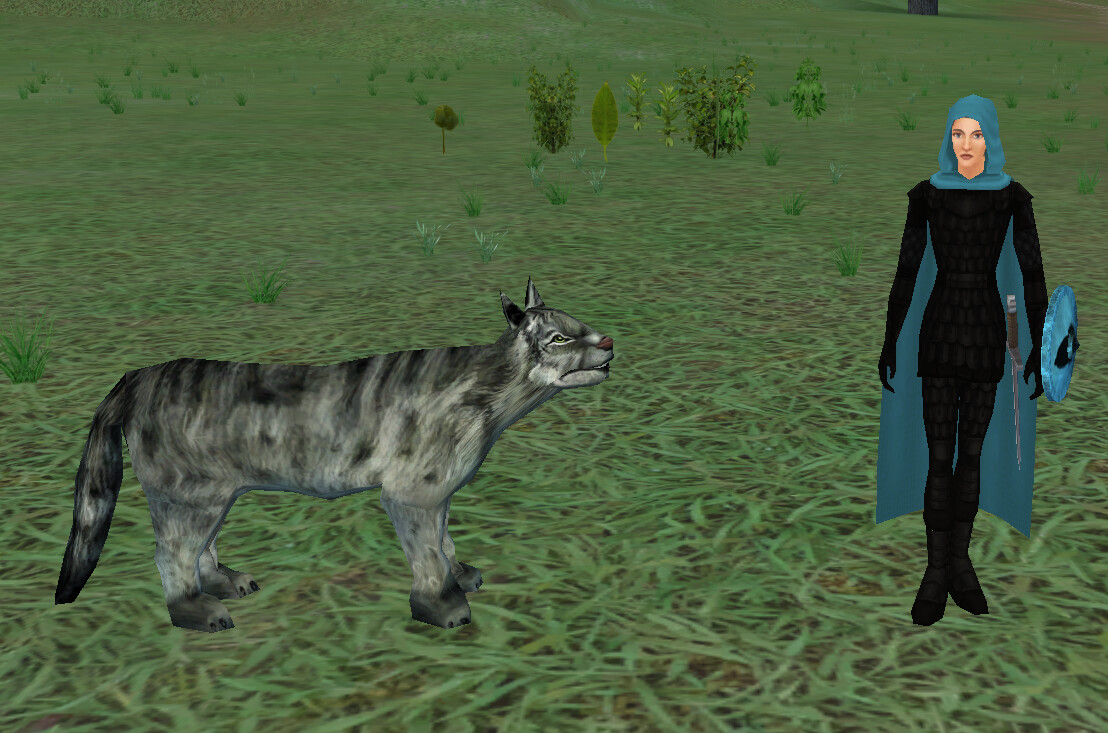
Druid is the main support class and backbone of most Hibernia groups. Druids are your primary healers and buffers, responsible for keeping the group alive, fully enhanced, cured, and stable under pressure. They bring the strongest single-target and spread heals, baseline buffs, spec buffs, and critical utility like instant heals, pets, cures, roots, and resurrection. A good Druid is constantly balancing healing output, buff maintenance, positioning, and crowd control awareness. Druid is a good choice for players that enjoy support pet classes with roles that extend beyond just healing.
Group Playstyle
In 8v8, the Druid is the main support of Hibernia and its role changes significantly depending on spec, especially whether they’re a Nature (“Natty”) or Buff (“Nurture”) Druid. At a high level, both Druid specs should be constantly evaluating:* “is my time better spent healing and supporting my team, or interrupting the enemy?”*
Nature Druid
The Nature Druid is often the aggressive Druid. In a Hib caster group, their primary role is frontline disruption.
In Hib caster groups, they push up with the Bard and look to snipe instant single-target roots, instant AoE roots, and casted roots to pin enemy supports and casters in place. This creates separation as the Hib group kites backward, forcing the enemy team to overextend while rooted players are left behind. As the Nature Druid goes to work, enemy support and casters cannot keep pace with their frontline, exposing the enemy frontline to kills by the Druid’s caster allies.
In Hib tanker setups, the Nature Druid role becomes even more aggressive… less about spacing and more about enabling the melee train by rooting, disrupting, interrupting, using their strong pet, and staying active in the fight rather than sitting back.
A strong Natty Druid is constantly looking for root angles, interrupt opportunities, and moments to punish bad enemy positioning.
Nurture Druid
The Buff Druid, by contrast, is usually the anchor of the backline.
Their job is much more defensive and controlled: maintaining healing throughput, triaging damage, curing utility, and stabilizing the group.
While the Natty is often forward and disruptive, the Buff Druid stays disciplined in the rear, preserving positioning and making sure the group doesn’t collapse under pressure. They’re the one watching for incoming spike damage, keeping the Bard and casters alive, communicating when allies are in danger, and making sure healing cadence stays uninterrupted.
A big part of DAoC is anticipation. A strong support Druid reads the fight and predicts incoming damage before it happens. For example:
-
You see enemy tanks disengage from one target and turn toward your Bard.
-
You notice an enemy caster about to debuff the foremost target in your group
-
Your Blademaster overextends and gets snared deep.
These are danger signals. Instead of waiting for health bars to move, you begin casting immediately. If the damage comes, your heal lands almost instantly after impact, often completely negating the enemy’s burst window.
This is what separates average Druids from elite ones. An average Druid heals what already happened. A great Druid heals what is about to happen.
Group Spec Options
Druid character builder:
https://blackthorn-daoc.com/class/Druid
39 Nurture, 35 Regrowth, 12 Nature
-
Typically the Nurture AKA “Buff” Druid
-
39 Nurture is mandatory for this role to get yellow Dex/Qui buff. Also provides yellow elemental resist buffs for the group
-
35 Regrowth provides great healing capabilities and gives you access to the level 35 group instant
-
12 Nature gives you a weak pet
39 Regrowth, 36 Nature, rest Nurture
-
Typically the Nature AKA “Natty” Druid
-
Historically on other servers, Natty spec was 40 Regrowth 36 Nature. However, because there is no cure nearsight on Blackthorn, there is little reason to go above 39 Regrowth if you are playing Nature spec.
-
For this reason, some Natty Druids prefer to drop Regrowth to 33-35 and raise Nature to 39. If you do this, you’ll get the level 39 AOE root.
-
-
39 Regrowth gives you excellent healing capabilities
-
36 Nature gives you instant single target and instant AOE roots, as well as a strong AOE root and strong pet
Group Realm Ability Builds
- First priority: Purge, Long Wind, Group Purge
Purge is essential for all Druid specs
Group Purge is a Purge that works on your entire group. It is arguably the best RA in the game. It is a must-have.
-
Second priority: Power Actives (MCL, Raging Power)
Druid is a very power-hungry class. MCL and Raging Power help tremendously. -
Third priority: Other passives (Augmented Dexterity) and other actives
Solo Playstyle
High spec’d Nature Druids have a place in the solo atmosphere, but it is still a difficult and uphill battle compared to other classes. If you choose to solo, you should consider going at least 41 if not 48 Nature.
PvE/Leveling
Druid is the backbone of nearly every Hibernian PvE group. While tanks control the fight and DPS classes kill the mobs, the Druid is the class that keeps the entire machine alive and functioning. In leveling groups, your role is simple: Buff the group, keep everybody alive, and manage your healing carefully so you do not rip aggro. A good Druid makes difficult pulls feel easy. A bad Druid gets everyone killed.
Core Role: Buff and Sustain
Before every pull, your first job is preparation by buffing the group with spec buffs. This is mandatory. Priority buffs go to:
-
Hero — main tank
-
Blademaster — melee DPS
-
Champion — hybrid DPS/debuffs
-
Bard — utility support
-
Warden — secondary support
Buffing properly:
-
increases survivability
-
improves DPS
-
reduces incoming healer stress later
Healing Carefully: Aggro Matters
This is one of the most important PvE lessons for Druids: Big heals generate big aggro. If you spam greater or instant heals too aggressively, you can pull aggro directly onto yourself. And in DAoC PvE: sometimes that aggro cannot be taunted off.