Overview
Bard is Hibernia’s premier support class and one of the most important classes in organized RvR. It’s a hybrid of healer, crowd controller, frontline disrupter, and utility bot all rolled into one. Bards are the realm’s primary song-based support with healing, speed, and crowd control. Their core toolkit revolves around AoE mezz, single-target mezz, instant amnesia, confusion, healing, curing, and endurance/power songs, which makes them the backbone of almost every Hib group. Bard is a good choice for players that like to play support and crowd control and have big impacts on the outcome of the fight.
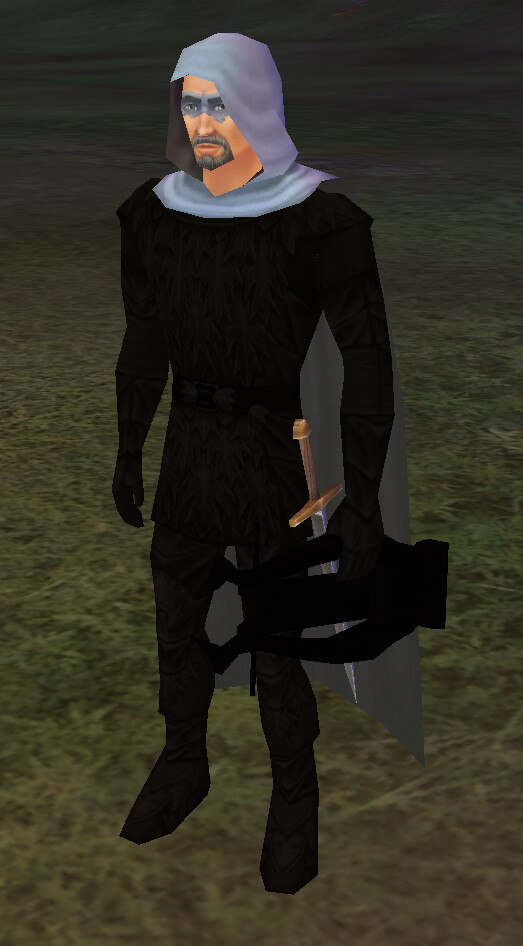
Group Playstyle
In 8v8, the Bard is the tempo controller for a Hibernia group. At a high level, a Bard in 8v8 is constantly asking one question: who controls the pace of this fight? Their entire role revolves around making sure the answer is your group
Mezz Wars
Their first responsibility on inc is almost always to open with crowd control landing the crucial AoE mezz that determines who gets the first advantage. Because Bards have instant amnesia, they are uniquely dominant in the mezz war; a well-timed insta amnesia can completely disrupt an enemy sorc, healer, or other caster mid-cast, making it extremely difficult to lose the opener if your timing and positioning are sharp.
Frontline Disruption
Once the fight breaks open, the Bard shifts into a constant cycle of triage and disruption. They’re scanning for multiple things at once:
-
*Who on my team is CC’d and needs demezz? *
-
Who is taking pressure and can I interrupt or amnesia the source of damage?
-
Which enemy support or caster is free casting and needs to be interrupted?
-
Which enemy classes will need to be CC’d for my team to win this fight?
If the Bard is playing in a Hib caster group, the Bard needs to be aware that his group will be kiting backwards. Therefore, the Bard cannot get caught too far up, tunnel-visioning on enemy support while its group and Druids move the opposite direction. Bards quickly can find themselves out of heal range if they lose sight of the battlefield. Bards have the difficult responsibility of simultaneously watching the enemy backline, but also the Bards own backline as well!
A Bard’s focus is rarely on damage… it’s on removing the enemy’s ability to execute while keeping their own group functioning.
Positioning
Positioning is everything. A Bard often plays near the front because that’s where their instant amnesias and DD interrupts get maximum value, but they can’t overextend and die. So there’s a constant mental balancing act: Can I push up safely to interrupt? Do I need to pull back and play from range? Is my group stable enough for me to play aggressively?
Group Spec Options
Bard character builder:
https://blackthorn-daoc.com/class/Bard
43 Nurture, 38 Music, 27 Regrowth, 10 Blades
-
43 Nurture is mandatory for highest speed
-
38 Music gives you yellow AOE mezz and the first single target insta mezz + first AOE insta mezz
-
27 Regrowth provides decent emergency heals
-
10 Blades gives you Glowing Blade (side snare) for drive by peels
-
More well-rounded spec for small man
47 Music, 43 Nurture, 13 Regrowth, 10 Blades
-
Increasing Music to 47 gives you the best AOE mezz and the best instant AOE mezz. Some group-only bards prefer this spec since they are almost never healing, anyway.
-
43 Nurture is mandatory for highest speed
-
Dropping Regrowth to 13 makes your heals largely irrelevant
Group Realm Ability Builds
-
First priority: Purge, Long Wind
Purge is essential for all Bard specs -
Second priority: Ameliorating Melodies, Mastery of Concentration, Mastery of Focus
AM is a group heal over time that ticks every 3 seconds. It is quite good, especially in Hib tanker setups.
MOC makes you an interrupting/CC machine.
MoF makes your mezzes less likely to be resisted.
- Third priority: Other passives (Augmented Dexterity) and other actives
Solo Playstyle
Bards are generally considered weak to average solo classes. While they can situationally be good in 1v1 due to their toolkit of speed, insta DD, and insta mezzes (and thus, the ability to reset a fight), it takes a long time to kill somebody and by the time you use the toolkit to kite somebody and damage them slowly, you are usually added and killed by larger forces.
That said, bard’s do get the most powerful solo spell in the game, namely the highest form of speed. This means they are a very safe solo class that can decide when, where and how to engage enemies, which means they may regularly find fights that they can win despite having pehaps the weakest killing ability in the game of all classes.
PvE/Leveling
Bard is the engine that keeps Hibernian leveling groups moving. While classes like Druid and Warden handle the heavier healing and defensive support, the Bard’s role is about tempo, sustain, and pull control.
Core Role: Group Tempo Manager
The Bard’s biggest value is not raw healing or damage, but efficiency. Your job is to keep the group moving by:
-
maintaining mana song
-
maintaining endurance song
-
pulling mobs cleanly
-
providing emergency crowd control when needed
You are the class that determines how fast the group can cycle pulls.
Mana Song
This is one of your most important contributions. Priority beneficiaries:
-
Druid
-
Animist
-
Mentalist
-
Eldritch
Why it matters:
-
faster mana recovery
-
less sitting between pulls
-
higher XP/hour
This should almost always be active during downtime.
Endurance Song
This keeps your melee group functional. Priority beneficiaries:
-
Hero
-
Blademaster
-
Champion
-
Valewalker
Why it matters:
-
allows nonstop style usage
-
keeps taunts available
-
keeps melee DPS high
Without endurance, melee groups slow down dramatically.
Pulling: A Common Bard Responsibility
In many groups, the Bard serves as the primary puller. Why? Because unlike Druids or Wardens:
-
you are not usually hard-casting heals constantly
-
your songs remain your primary active contribution
-
you have mobility and utility to manage pulls